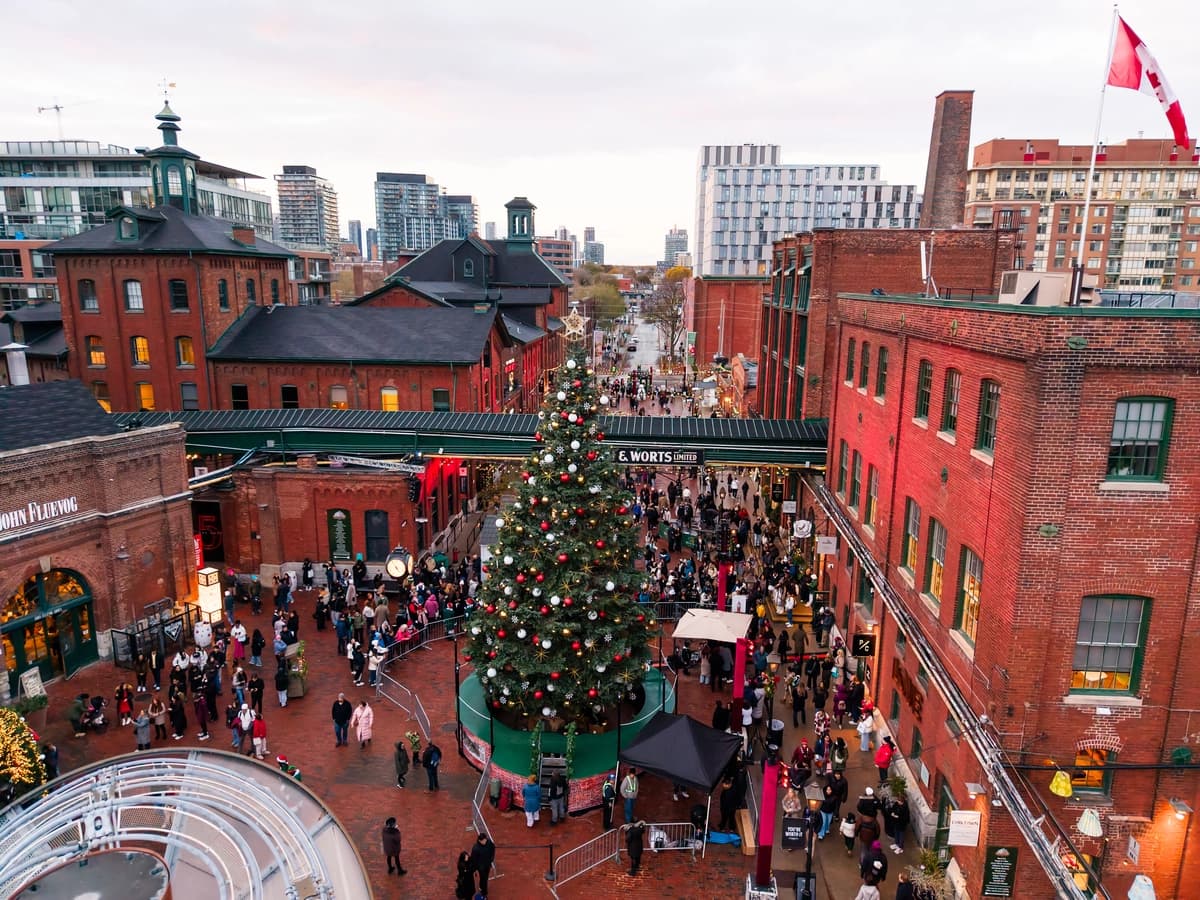
The Toronto Light Festival at the Distillery Historic District is one of those winter events that instantly changes the feel of the city. When the days get shorter and the air turns crisp, Toronto starts leaning into experiences that make the evening feel worth stepping out for—and this festival is a prime example. The district becomes an open-air showcase of illuminated art, creative installations, and glowing displays placed throughout its pedestrian streets, turning a historic neighbourhood into a nighttime walk that feels like a mini escape from the usual routine.
What makes the Toronto Light Festival so memorable isn’t just the art itself—it’s the way it sits inside the Distillery District. The setting is already one of Toronto’s most visually distinct areas, filled with preserved industrial architecture, brick façades, courtyards, and narrow lanes that create a cinematic backdrop even on a normal day. When the light installations arrive, the neighbourhood shifts into something that feels part art gallery, part winter stroll, and part city-night atmosphere. It’s easy to see why it’s become a go-to choice for people who want something social, walkable, and visually impressive in Toronto during the colder months.
What the Toronto Light Festival is
The Toronto Light Festival is a seasonal light-art experience spread across the Distillery District. Instead of being focused on a single stage or one central attraction, the event is experienced by moving through the neighbourhood and discovering installations as you go. The artworks are positioned along the district’s lanes, courtyards, open squares, and building edges, so the festival feels like a continuous “route” made of different visual moments—some bold and massive, others subtle and tucked away.
The festival is typically defined by variety. Some installations are sculptural and structural, built to stand as glowing statements against the dark winter sky. Others are immersive, designed to shift perception as you walk past them. You’ll often see works that use colour, reflection, projection-style effects, and layered lighting to transform familiar spaces into something new. Because the district has so many corners and small passageways, the experience naturally feels like discovery—turn one corner and a new piece appears; pass through a courtyard and the mood changes again.
The Distillery District: the setting that makes the festival feel bigger
The Distillery Historic District is one of the few places in Toronto that doesn’t feel like the rest of the city. It has a preserved, heritage look that comes from its industrial past: brick buildings, iron details, repurposed warehouse structures, and pedestrian-only lanes that remove the usual noise of traffic. It feels contained and walkable, which gives the area a natural “wander” energy. That’s a perfect match for a light festival, because the environment already encourages slow exploration.
There’s also a distinct visual contrast at play. The district feels old-world and textured—brick, stone, warm storefront lighting—while the installations often feel modern and futuristic, filled with neon-like brightness, shifting colours, and clean shapes. That contrast is part of what makes the festival so striking. A glowing installation doesn’t just look bright; it looks brighter against weathered brick walls. A colour-changing display doesn’t just look artistic; it looks dramatic when framed by heritage architecture. The neighbourhood becomes part of the artwork simply by being the canvas.
The Distillery District is also known for its cultural feel year-round—art galleries, studios, boutique spaces, and restaurants sit within the same compact footprint. During the Toronto Light Festival, the sense of “place” becomes even stronger. It’s not only the installations that draw people; it’s the atmosphere created by people moving through the lanes, stopping to look, turning back for a second view, and gathering in open areas where the lights feel most intense.
What you’ll see: the visual character of the installations
While the specific lineup can change season to season, the overall visual character of the Toronto Light Festival tends to follow a recognizable pattern: a blend of large anchor pieces and smaller installations that reward exploration. The larger works often function like focal points—pieces that people naturally gravitate toward and that set the tone for the event. These can be towering structures, sculptural forms, or bright “centerpiece” installations that are instantly recognizable in photos and videos.
Beyond the anchors, there are usually smaller pieces that feel like hidden finds. These might appear along a narrow lane where light spills across brick textures, or in a courtyard where an installation changes the feeling of the entire space. The district layout creates layers: you can experience the same installation from different approaches, and it can feel different depending on whether you’re arriving from a bright, open stretch or a quieter side lane.
Light as sculpture
A big part of the festival’s appeal is that light isn’t treated like decoration—it’s treated like a building material. Installations often use light to define shape and structure the way metal or stone would. Some pieces look like modern sculptures that simply happen to glow; others look like pure light forms where the brightness itself becomes the shape. In a district filled with strong architectural lines, this style of work stands out sharply.
Immersive moments and walk-through pieces
The festival often includes installations that create the feeling of stepping into the artwork. Walk-through shapes, arch-like structures, corridor effects, or “surround” moments can change how a space feels as you move through it. In the Distillery District, these moments can be especially impactful because the lanes themselves feel like contained paths, making immersion feel natural rather than staged.
Colour and reflection
Many installations are built around colour shifts—warm to cool, bright to soft, steady to animated—creating an evolving feel as you move through the district. Reflective surfaces can also change the way light behaves in the space, multiplying it, stretching it, or throwing it back in unexpected angles. This plays beautifully with brick walls, windows, and the district’s industrial textures, because reflections make the environment look more layered than it really is.
The atmosphere: what the festival feels like on a winter night
The Toronto Light Festival tends to carry a specific kind of energy: social but not chaotic, lively but still easy to move through. People come in all kinds of groups—friends meeting up, couples on winter dates, families exploring earlier in the evening, visitors who want a Toronto experience that feels distinct from standard tourist spots. The district naturally supports that mix because it’s designed for walking, pausing, and gathering without the pressure of one “main moment” you could miss.
The best word for the atmosphere is bright. Not only because of the installations, but because the whole district feels lifted by them. Winter nights can sometimes feel like the city is winding down early. During the festival, the opposite happens: the streets feel active, the lanes feel inviting, and the glow gives the neighbourhood an identity that feels celebratory without needing a stage or a loud soundtrack.
Another defining part of the atmosphere is how naturally it creates “scenes.” You’ll see people stopping, turning, framing shots, laughing, grouping up, and using the installations as meeting points. Even if you’re not focused on photos, the event still feels visually alive—like the district has become a moving gallery where the visitors are part of the experience.
Why it’s one of Toronto’s signature winter experiences
Toronto has plenty of winter events, but not all of them feel equally accessible or easy to enjoy. The Toronto Light Festival stands out because it doesn’t require you to commit to one format. It works whether you spend an hour or an evening. It works whether you arrive with a plan or just show up. It works whether you’re a local looking for something different or a visitor trying to find a Toronto winter moment that actually feels unique.
It also connects to a broader identity Toronto has built in winter: turning cold nights into experiences that feel worth going out for. Light festivals are a perfect match for that—light makes the dark feel welcoming, and art gives the walk a purpose. In the Distillery District, that combination feels especially strong because the neighbourhood already carries a mood that feels removed from typical city streets.
Frequently asked questions
Where is the Toronto Light Festival held?
The festival takes place throughout the Distillery Historic District in Toronto. Installations are placed across the neighbourhood’s pedestrian lanes, courtyards, and open areas, making the entire district part of the experience.
Is the Toronto Light Festival an indoor event or outdoor event?
The festival experience is primarily an outdoor walk through the district, with installations placed throughout the neighbourhood. The setting is part of the appeal: heritage architecture, pedestrian streets, and winter-night atmosphere.
What kind of art installations are featured?
The Toronto Light Festival typically features a mix of illuminated sculptures, large statement pieces, immersive walk-through moments, and installations that use colour, reflection, and light effects to transform the district’s spaces.
What makes the Distillery District different from other Toronto neighbourhoods?
The Distillery District is a preserved heritage area with historic industrial buildings, brick lanes, and pedestrian-only streets. That architecture creates a unique backdrop that makes illuminated art feel more dramatic and immersive.
Is the festival better for couples, groups, or solo visitors?
The format tends to suit all three. Because the experience is a walk with multiple installations spread throughout the district, it naturally works for couples, groups, and solo visitors who enjoy exploring at their own pace.
After the Toronto Light Festival: alcohol delivery with Instabooze (Toronto & GTA)
If you’re back at your home, condo, or hotel after the event and decide you want alcohol delivered, Instabooze provides alcohol delivery across Toronto and the GTA. Ordering is done through our site, and delivery is completed with an ID check at the door to make sure the order is received by an eligible adult.
To get started, you can browse the full selection here: Instabooze Menu. If you want to confirm coverage in your area, these pages are the fastest way to check service availability: Toronto and Mississauga.
Instabooze selection: beer, wine, sparkling wine, and spirits
Instabooze offers a wide range of alcohol options, including beer, wine, sparkling wine, and popular spirits. If you already know what you want, the main menu is the quickest way to place an order. For category browsing, you can use: Beer, Wine, Sparkling Wine, Vodka, and Whisky.
If you need help with an order or delivery notes, you can reach us here: Contact Instabooze.